FHA vs. Conventional Loans: Why These Mortgage Payments Are So Different
When buying a home, one of the biggest surprises for many buyers is how much the type of loan affects the monthly payment. Even when the interest rate is the same, your payment can change dramatically depending on your down payment and loan program.
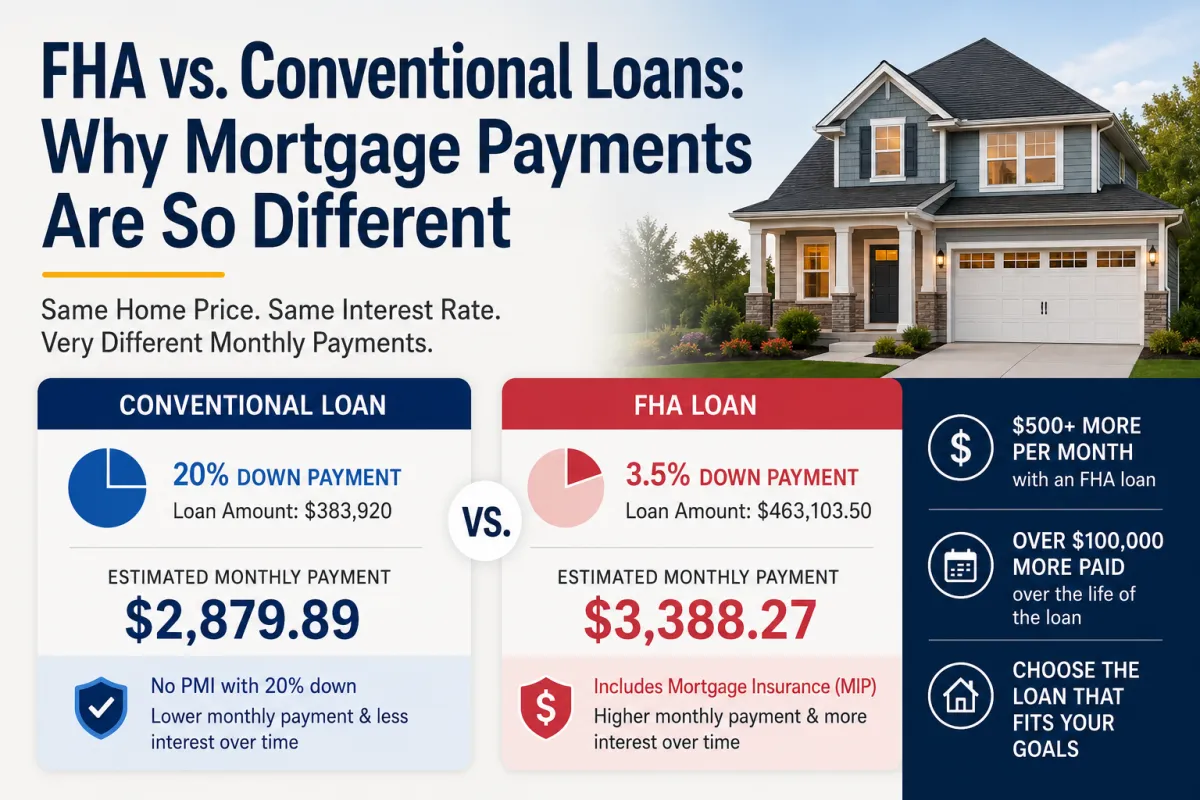
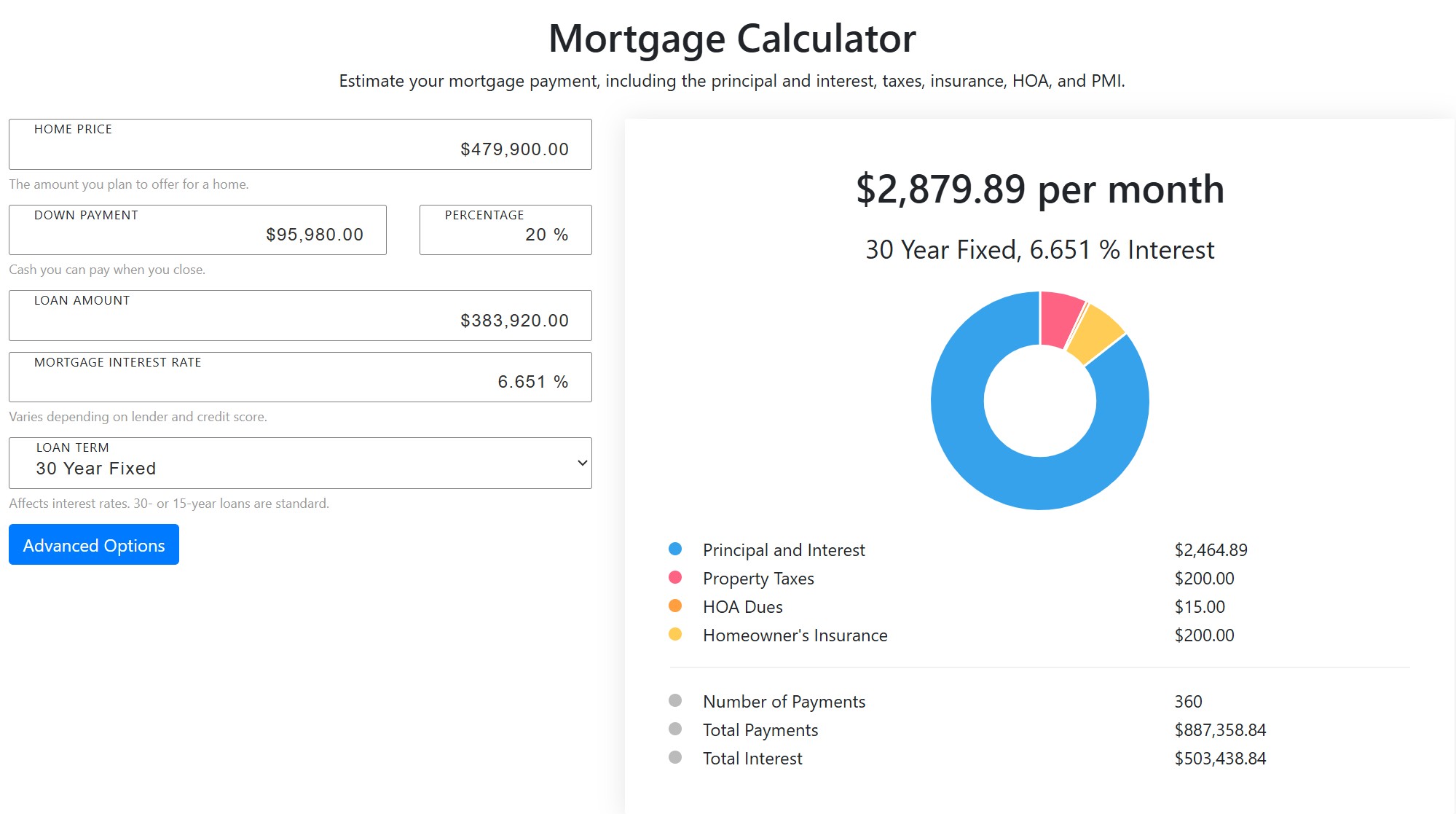
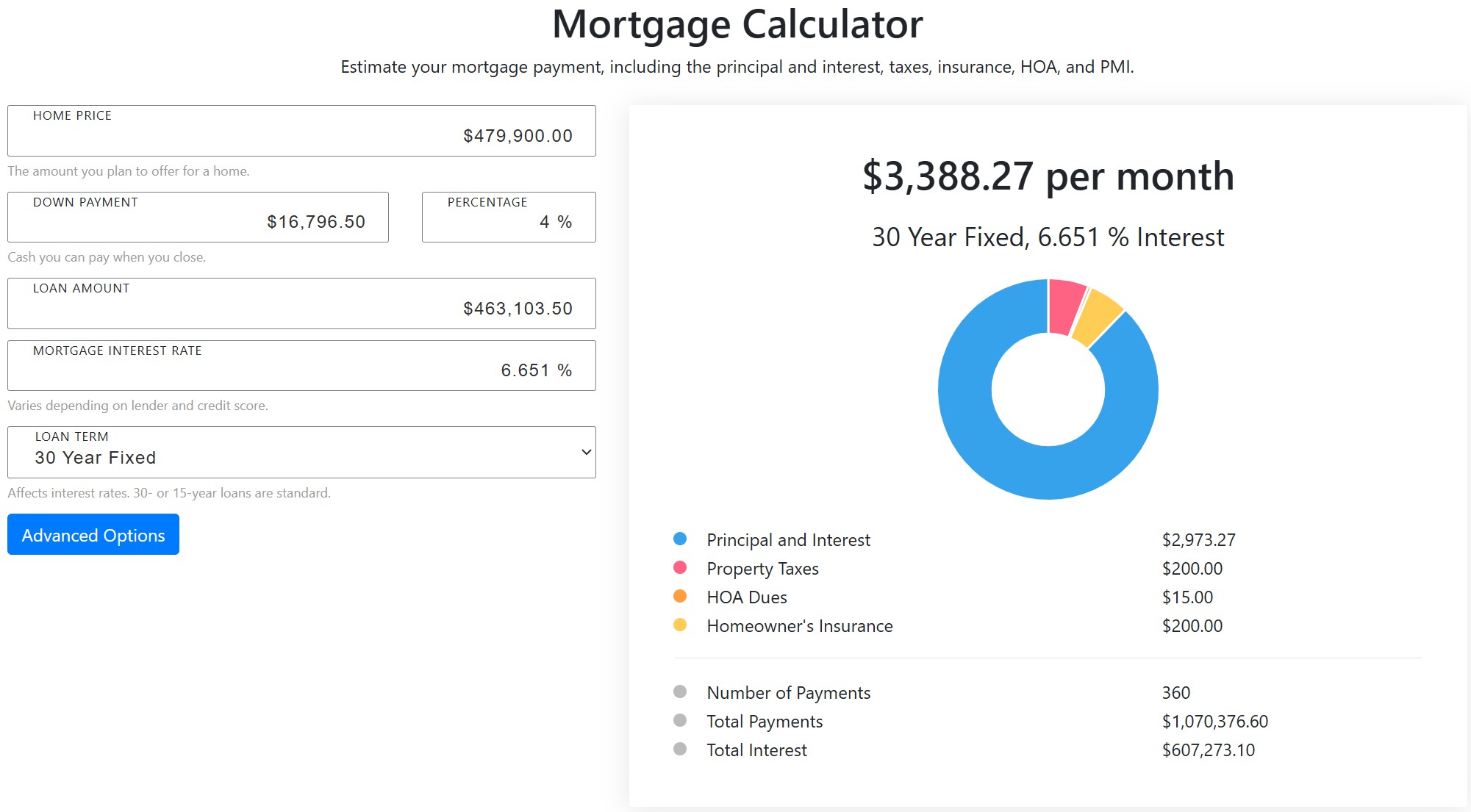
In the examples above, both buyers are purchasing a home priced around $479,900 with the same 6.651% interest rate on a 30-year fixed mortgage. However, the monthly payments are very different because one loan is Conventional financing with 20% down, while the other is an FHA loan with 4% down.
Let’s break down why.
Conventional Loan Payment Example
Home Price
$479,900
Down Payment
20% ($95,980)
Loan Amount
$383,920
Estimated Monthly Payment
About $2,879/month
With a conventional loan, the buyer is putting down a much larger amount upfront. Because of that:
The loan amount is smaller
Monthly principal and interest payments are lower
No monthly mortgage insurance (PMI) is required with 20% down
This creates a lower overall monthly payment and saves a substantial amount of money over time.
Benefits of a Conventional Loan
Lower monthly payment
Less interest paid over the life of the loan
No PMI with 20% down
Often better long-term savings
Things to Consider
Requires a larger down payment
May need stronger credit scores
More cash needed at closing
For buyers who have savings available and want to reduce their monthly housing costs, conventional financing is often a great option.
FHA Loan Payment Example
Home Price
$479,900
Down Payment
4% ($16,796)
Loan Amount
$463,103
Estimated Monthly Payment
About $3,388/month
The FHA loan allows the buyer to purchase the home with significantly less money upfront. That lower down payment can make homeownership more accessible, especially for first-time buyers.
However, there are trade-offs.
Because the buyer is financing a much larger loan amount, the monthly payment increases. FHA loans also include mortgage insurance premiums (MIP), which add to the monthly cost.
Why the FHA Payment Is Higher
The FHA payment is higher because:
The buyer borrowed more money
Monthly mortgage insurance is required
More interest is paid over time
In this example, the FHA buyer pays roughly:
$500 more per month
Over $100,000 more in total payments over the life of the loan
That is a significant difference.
Why Buyers Still Choose FHA Loans
Even though the payment is higher, FHA loans remain extremely popular.
Why?
Because many buyers simply do not have 20% saved for a down payment.
An FHA loan can help buyers:
Purchase sooner
Keep more cash in savings
Qualify with lower credit scores
Enter the market before home prices rise further
For many families, the opportunity to own a home now outweighs the higher monthly payment.
Which Loan Is Better?
The answer depends on your financial situation and goals.
A Conventional Loan May Be Better If:
You have a larger down payment saved
You want the lowest monthly payment possible
You have strong credit
You plan to stay in the home long-term
An FHA Loan May Be Better If:
You need a lower down payment option
You are a first-time home buyer
Your credit score is lower
You want to buy sooner rather than later
Neither option is “right” or “wrong.” They simply serve different buyers and different financial situations.
Final Thoughts
The difference between these two mortgage payments highlights an important lesson in real estate: your loan structure matters just as much as the home price.
A larger down payment can dramatically reduce:
Monthly payments
Mortgage insurance costs
Lifetime interest paid
But lower down payment loans like FHA financing can make homeownership possible much sooner for many buyers.
Before choosing a loan, it’s always smart to talk with a trusted lender and compare:
Monthly payment
Cash needed at closing
Mortgage insurance
Long-term costs
Understanding these numbers upfront can help you make the best decision for your future home and budget.
To Search for Homes, See What's Going On In Your Area, or See the Latest Listings CLICK HERE!

Georgia Evans
(615) 542-7880